
IT Services for Sports Performance Clinics from a healthcare-only team
Your sports performance clinic sells precision: VO2 max and lactate threshold testing, countermovement jump analysis on force plates, 3D biomechanics captures, and return-to-play benchmarks that athletes, parents, and team staff pay real money to trust. None of that precision survives a flaky network, a crashed capture workstation, or a metabolic cart laptop that refuses to sync. Medical IT Company provides managed IT services for sports performance clinics, human performance labs, and athlete testing facilities nationwide. We keep force plate systems from vendors like Hawkin Dynamics and VALD connected to their cloud dashboards, motion-capture rigs fed with the bandwidth and storage they demand, and velocity-based training sensors talking to every rack on the floor. We tie wearable feeds and testing data into athlete management systems such as TeamBuildr, CoachMePlus, and Teamworks so your coaches see one clean picture instead of six separate logins. Because much of your revenue is cash-pay testing packages and memberships, we lock down the scheduling, billing, and CRM platforms that keep it flowing. And because athlete performance data sits in a gray zone between fitness metrics and health information, we secure it to a medical-grade standard, covering HIPAA obligations when they apply and state consumer health privacy laws when they do not. Our helpdesk answers in minutes, not days, so a failed sensor pairing never eats an athlete’s testing slot. From a single gait lab to a multi-site performance franchise, we design, monitor, and support the entire stack. Medical IT Company keeps sports performance clinics fast, secure, and online.
why choose us for IT Services for Sports Performance Clinics
Sports performance clinics choose Medical IT Company because we treat a testing lab like the revenue-critical medical environment it really is.
Performance-Lab Fluency
We already speak force plate, metabolic cart, and motion capture. Your staff never has to explain what a countermovement jump export is before getting real help.
Athlete Data Privacy
Medical-grade security applied to testing results, wearable feeds, and body composition data. HIPAA, state privacy laws, and team confidentiality contracts are covered, not guessed at.
Revenue-Aware Support
Every testing slot is billable, so we treat downtime as lost revenue. Priority response keeps assessments, memberships, and billing systems running through your busiest testing days.


more ways we support healthcare





healthcare IT challenges sports performance clinics face
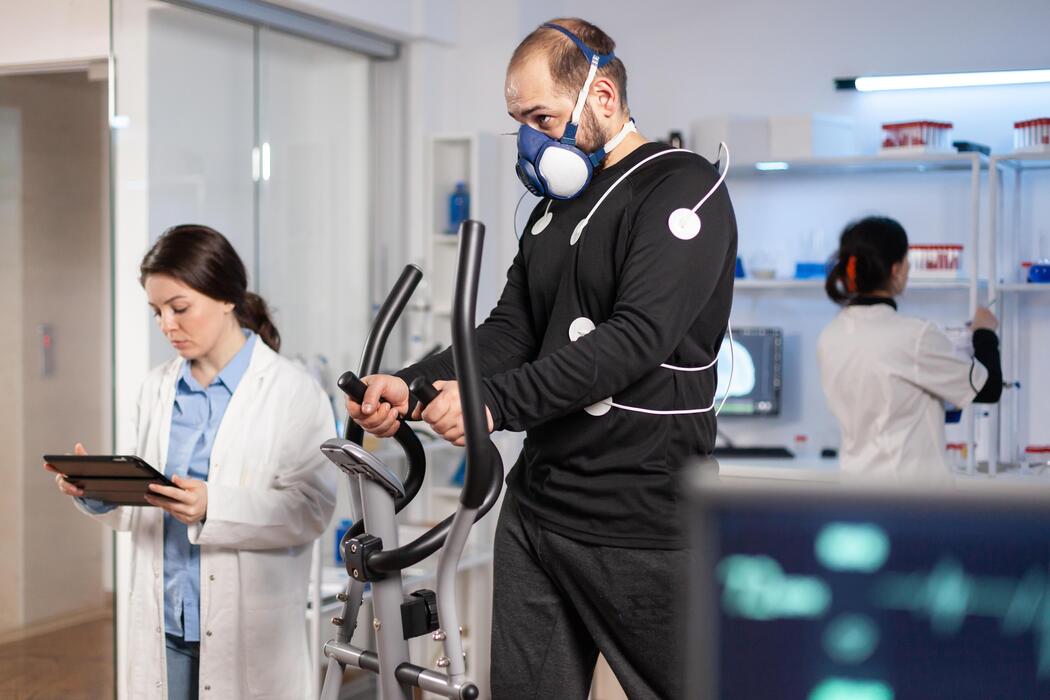
A modern human performance lab is closer to a small data center than a gym. A metabolic cart runs on its own dedicated PC, force plates pair to tablets over Bluetooth or Wi-Fi, velocity-based training sensors hang on every rack, timing gates line the sprint lane, and a biomechanics station renders 3D models in real time. Each device ships from a different vendor with its own software, its own cloud portal, its own firmware schedule, and its own opinion about your network. Most clinics have a director of performance, not a director of IT, so nobody owns the sprawl until an assessment fails in front of a paying athlete or a visiting team scout.
The infrastructure demands are heavier than they look. Multi-camera motion capture and high-speed video generate enormous files that choke consumer-grade networks and fill workstation drives within months. Meanwhile the training floor itself is a hostile radio environment: a steel building packed with athlete phones, wireless headphones, heart rate straps, and dozens of Bluetooth sensors all competing for spectrum. Force plate tablets drop mid-jump, live dashboards lag during team testing days, and staff quietly develop workarounds instead of trusting the technology they bought.
Athlete data privacy is the challenge most clinics underestimate. Performance testing results, body composition scans, wearable recovery scores, and return-to-play benchmarks are health information in everything but name. HIPAA can attach when you take physician referrals, share records with a sports medicine practice, or bill insurance, while state consumer health privacy laws increasingly regulate biometric data even for pure cash-pay facilities. Professional teams, college programs, and agents add contractual confidentiality demands on top, because a leaked testing file on a draft prospect is a career-level breach for everyone involved.
Finally, the business runs on uptime economics. Cash-pay clinics live and die by booked testing slots, membership billing, and packages sold through platforms that must stay online and PCI-compliant. An hour of downtime is not an inconvenience, it is unrecoverable revenue and a credibility hit with clients who chose you for your technology. Growing into a second or third location multiplies every one of these problems unless the stack is standardized, monitored, and supported by people who understand what a performance lab actually does.
sports performance clinics IT FAQs
Most sports performance clinics pay a flat monthly rate based on user and device count, which typically lands between 100 and 250 dollars per user per month. Where you fall in that range depends on how much specialized equipment we manage, your storage and backup footprint, and the compliance requirements tied to your referral and team relationships. Lab buildouts, such as cabling a new capture space or standing up a second location, are quoted as fixed-price projects so there are no surprises. A flat rate means a testing-day emergency costs you nothing extra, and it is almost always cheaper than one lost team contract or a single data incident. Medical IT Company starts every engagement with a free assessment of your clinic, so you get a firm number before you commit to anything.
We secure performance data the same way we secure patient records in medical practices, because the stakes are comparable. That means encryption at rest and in transit, multi-factor authentication on every account, role-based access controls, and audit logging that shows exactly who viewed a testing file and when. We replace risky habits like emailing spreadsheets of combine results with secure sharing portals and expiring links. We also help you meet the specific data handling language in team and agency contracts, and we maintain an incident response plan so a lost laptop never becomes a leaked draft profile. High-profile athletes bring high-profile scrutiny, and your security posture should be a selling point, not a liability.
In most cases, yes, and consolidating those feeds is one of the highest-value projects we run for performance clinics. Platforms like TeamBuildr, CoachMePlus, Kitman Labs, and Teamworks AMS are built to ingest data from force plates, GPS units, and wearables such as Catapult, WHOOP, Oura, and Polar through native integrations and APIs. We configure and maintain those connections, set up single sign-on so coaches stop juggling passwords, and build role-based permissions so an intern sees only what an intern should. When a vendor changes an API and a data feed silently dies, our monitoring catches it before your sport scientists do. The result is one trustworthy dashboard instead of six disconnected exports.
It depends on how your clinic operates, and the answer is often messier than owners expect. A purely cash-pay facility that never bills insurance is usually not a HIPAA covered entity, but obligations can attach the moment you accept insurance, contract with a covered sports medicine practice, or receive physician referrals that include medical records. Even outside HIPAA, state consumer health privacy laws such as Washington’s My Health My Data Act treat biometric and performance data as protected information. Professional and collegiate team agreements frequently layer their own confidentiality and data handling requirements on top of that. Medical IT Company maps exactly how athlete data enters, moves through, and leaves your clinic, then builds security controls that satisfy the strictest standard you touch so you never have to guess.
Yes, supporting performance-testing hardware is the core of what we do for this industry. We manage the tablets, laptops, and networks behind force plate systems from Hawkin Dynamics, VALD ForceDecks, and KINVENT, plus metabolic carts from COSMED and Parvo Medics, velocity-based training tools like GymAware and Perch, and 1080 Motion resistance devices. That means dedicated SSIDs and clean wireless spectrum so plates never drop pairing mid-jump, managed updates so firmware changes never land the morning of a team testing day, and device policies that keep athlete-facing tablets locked down. When something breaks, we work the vendor support ticket for you instead of leaving your coaches on hold. Your staff runs the assessments while we keep the instruments online.
Far more than a standard office network provides, which is why so many labs struggle with dropped frames and full drives. Multi-camera optical systems from Vicon, Qualisys, and OptiTrack, along with markerless workflows running software like Theia3D, can generate tens of gigabytes per session and demand low-latency wired connections between cameras and the capture workstation. We design gigabit or 10Gb wired backbones, isolate capture traffic on its own VLAN, and spec workstations that can process and render without bottlenecks. For storage, we deploy on-site NAS capacity for active projects with automated tiering to encrypted cloud archive, so you keep years of athlete baselines without buying drives every quarter. Everything is backed up and restorable, because a lost season of gait data cannot be re-collected.