
IT Services for Sperm Banks and Cryobanks from a healthcare-only team
A sperm bank or cryobank runs on a promise that never expires: the specimen frozen today must still be viable and traceable decades from now. That promise lives inside a liquid-nitrogen tank held near minus 196 degrees Celsius, where a single failure can destroy donor material that can never be replaced. Continuous cryogenic monitoring, with IoT sensors watching LN2 level and temperature and escalating alarms the instant a reading drifts, is not a convenience here but the core of the business. At the same time, the operation has to defend some of the most sensitive data in medicine: donor identities, genetic screening panels, infectious-disease testing, and recipient records that must be linked and retained for the lifetime of the specimen. FDA regulates these products as HCT/Ps under 21 CFR Part 1271, layering donor-eligibility determinations, current good tissue practice, and tracking obligations onto every vial. CLIA governs the testing lab, and record-retention rules demand that documents survive at least ten years past a specimen’s final disposition. Chain of custody has to be provable from donor intake through cryo-tracking, thaw, and shipment to a clinic across the country. Clinics expect a secure ordering and shipping portal that shows real-time inventory and moves specimens in validated dry shippers without a dropped handoff. And because both the physical vials and the digital records are irreplaceable, disaster recovery has to protect against a flood, a fire, and a ransomware event on the same day. Medical IT Company keeps sperm banks and cryobanks fast, secure, and online.
why choose us for IT Services for Sperm Banks and Cryobanks
Support built around cryogenic tank monitoring, HCT/P donor records, and specimens that can never be replaced.
tanks monitored
LN2 level and temperature sensors watch every cryo tank continuously. Tiered alarms reach a human by call, text, and email the moment a reading drifts.
records protected
Donor eligibility, genetic panels, and CLIA results stay encrypted, audit-logged, and access-controlled. Retention holds for the full ten-plus years the specimen lives.
chain of custody
Every vial is traceable from donor intake through cryo-tracking to the recipient clinic. Electronic witnessing and LIMS integration cut mislabeling and lost-vial risk.


more ways we support healthcare





healthcare IT challenges sperm banks and cryobanks face
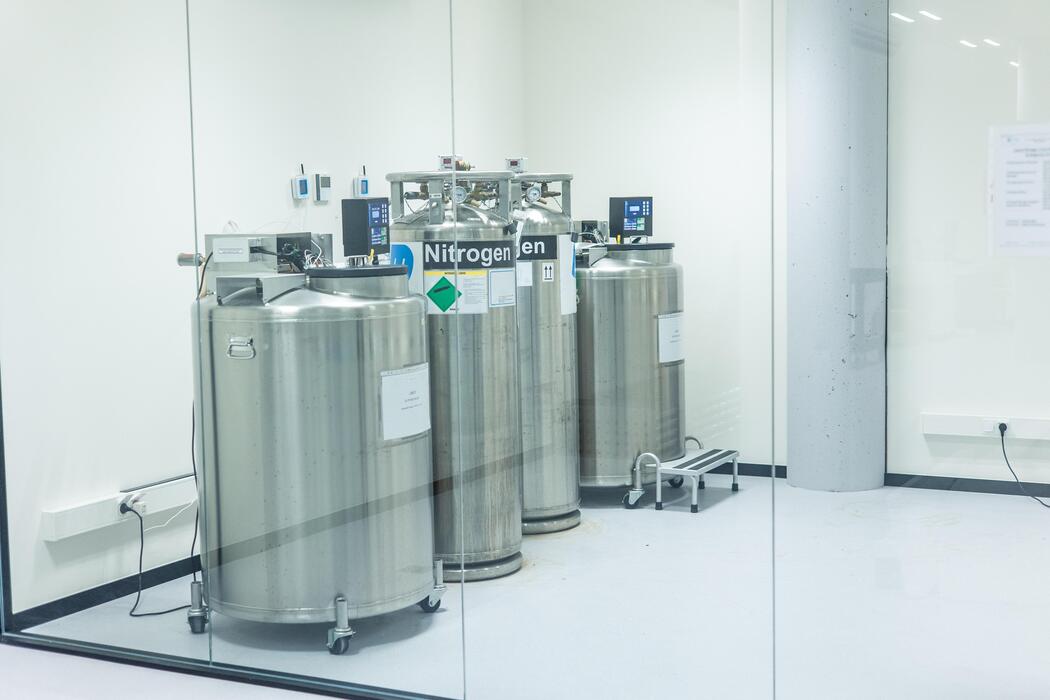
The defining risk in a cryobank is silent and physical. A cryogenic tank can lose vacuum, spring a leak, or exhaust its liquid nitrogen overnight, and by the time anyone smells a problem the specimens are gone. Modern monitoring platforms such as Vaisala, CenTrak, and XiltriX pair LN2 level and temperature probes with cloud dashboards and tiered alarm escalation, but those systems only protect you if the network, the gateways, and the notification path are engineered to never quietly fail. We build the sensor network, redundant connectivity, and on-call alerting so a low-level alarm reaches a human by call, text, and email within seconds, day or night, even during a power or internet outage.
Then there is the data. Under 21 CFR Part 1271 Subpart C, every donor needs a documented eligibility determination built from screening and infectious-disease testing, and Subpart D good tissue practice demands controlled records and specimen tracking that let you trace any vial back to its donor and forward to its recipient. Genetic panels, karyotypes, quarantine status, and CLIA lab results all have to live in systems that are access-controlled, audit-logged, and retained for at least a decade past disposition. Cryo-tracking and biobank LIMS tools like Freezerworks, OpenCryo, and electronic-witnessing platforms from TMRW Life Sciences reduce mislabeling and lost-vial errors, and we integrate them cleanly with your donor management and EHR instead of leaving islands of spreadsheets.
The bank is also a shipping and ordering business. Fertility clinics, physicians, and directed recipients place orders and expect a secure portal that reflects live inventory, confirms donor eligibility, and dispatches specimens in validated vapor shippers with temperature logging in transit. That portal touches payment data, PHI, and interstate commerce, so it has to be hardened, encrypted, and monitored while staying simple enough that a clinic coordinator can reorder in a minute. We design the portal, the integrations, and the access controls around how your clients actually order.
Finally, catastrophe here is double: you can lose the physical specimens and the records that prove what they were. A ransomware event that encrypts your inventory database is nearly as damaging as a tank failure, because a vial you cannot identify or match is functionally lost. We build immutable, offsite, tested backups of every donor and inventory record, network segmentation that keeps tank-monitoring and lab systems away from general traffic, and a disaster-recovery plan rehearsed against the scenarios that actually threaten a tissue bank.
sperm banks and cryobanks IT FAQs
Pricing depends on the number of cryo tanks and sensors, how many staff and locations you run, and which cryo-tracking, LIMS, and portal systems you use. Most cryobanks work best with a predictable monthly managed-services plan that bundles tank-monitoring support, security, compliance help, backups, and a help desk. We start with an assessment of your tanks, network, software, and 21 CFR Part 1271 obligations, then quote a flat rate with no surprises. Larger projects like portal builds or LIMS integrations can be scoped separately. Contact us for a tailored quote built around your specific storage operation.
In a tissue bank a disaster is double, because you can lose both the physical vials and the records that identify them. On the physical side we make sure tank monitoring, alarms, and redundant power keep specimens safe through outages and weather events. On the digital side we maintain immutable, offsite, regularly tested backups of every donor and inventory record so a ransomware attack cannot leave you with unidentifiable vials. We build and rehearse a disaster-recovery plan tuned to the scenarios that actually threaten a cryobank. That way inventory, eligibility records, and client orders can be restored quickly and completely.
Cryobanks hold some of the most sensitive records in medicine, including donor identities, genetic panels, and lifelong recipient links. We protect them with encryption at rest and in transit, role-based access controls, and detailed audit logging that shows who touched what and when. Network segmentation keeps tank-monitoring and lab systems isolated from general office traffic to shrink the attack surface. We add multifactor authentication, endpoint protection, and continuous monitoring to catch intrusions early. Because your retention obligations span decades, we make sure the security controls follow the data for its entire life.
Tank failure is the single worst event a cryobank can face, so we treat it as the top priority. We deploy LN2 level and temperature sensors on every tank and connect them to a monitoring platform such as Vaisala, CenTrak, or XiltriX with cloud dashboards and tiered alarm escalation. The alerting path is engineered for redundancy, so a low-level or high-temperature alarm reaches on-call staff by phone call, text, and email within seconds. We add backup connectivity and power for the gateways so a facility outage does not silence the alarms. The goal is that no drift or leak ever goes unnoticed long enough to threaten a specimen.
Part 1271 regulates your specimens as HCT/Ps and drives much of your recordkeeping. We build systems that support Subpart C donor-eligibility determinations, capturing screening and infectious-disease testing in access-controlled, audit-logged records. For Subpart D good tissue practice, we make sure specimen tracking lets you trace any vial back to its donor and forward to its recipient. Retention is enforced so records survive at least ten years past a specimen’s distribution or disposition, whichever is later. We also coordinate with your CLIA lab systems and quality team so the documentation holds up under FDA inspection.
Yes, and clean integration is where most banks lose accuracy. We connect biobank LIMS and cryo-tracking tools like Freezerworks or OpenCryo, electronic-witnessing platforms such as TMRW Life Sciences, your donor management system, and your EHR so data flows instead of living in disconnected spreadsheets. That linkage keeps inventory counts, quarantine status, and location data consistent across every system. We handle the interfaces, field mapping, and validation so a vial’s identity and eligibility travel with it. The result is fewer mislabeling errors and a defensible chain of custody from intake through shipment.