IT Services for Radiation Oncology Centers from a healthcare-only team
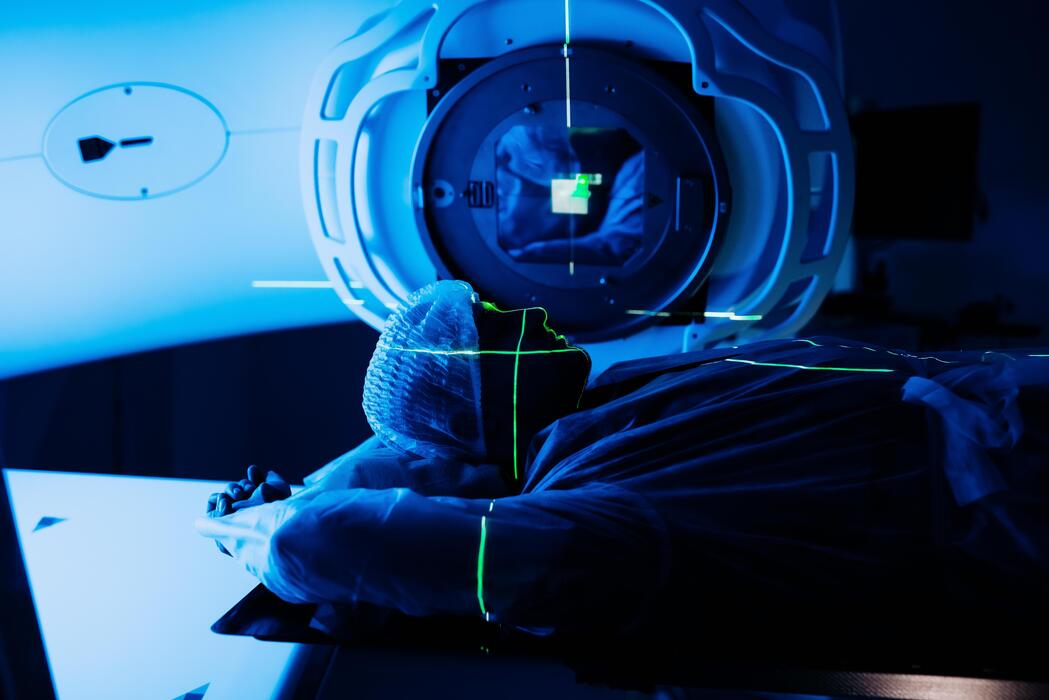
A radiation oncology center runs on a tightly coupled chain of technology, and every link has to hold before a single beam is delivered. Your oncology information system, whether ARIA from Varian or MOSAIQ from Elekta, is the record-and-verify backbone that confirms each patient receives the exact prescribed dose to the exact planned location. Treatment planning systems like Eclipse and RayStation crunch enormous CT simulation and DICOM-RT datasets that must move cleanly from sim to plan to the linear accelerator. When a LINAC or the OIS goes down, treatments stop, schedules collapse, and patients on time-sensitive regimens lose ground. The interfaces between simulation, planning, and delivery are unforgiving, and a single broken feed can idle a vault worth millions. Ransomware crews now target cancer centers directly, putting both PHI and patient safety at risk in the same attack. You need an IT partner who understands record-and-verify integrity, image-guided radiation therapy, and the uptime stakes of a treatment vault. Medical IT Company keeps radiation oncology centers fast, secure, and online.
why choose us for IT Services for Radiation Oncology Centers
Support built around record-and-verify integrity, LINAC uptime, and the safe delivery of every prescribed dose.
record-and-verify safe
We protect the integrity of ARIA and MOSAIQ so every plan is verified and every prescribed dose reaches the right target on the right patient.
vault uptime
Your linear accelerators and treatment consoles stay online and monitored around the clock, so scheduled treatments never stall and patients keep moving through the vault.
data that flows
Large CT simulation studies and treatment plans from Eclipse and RayStation move across your network intact, fast, and ready the moment they reach the console.


more ways we support healthcare





healthcare IT challenges radiation oncology centers face
Radiation oncology sits at the intersection of high-stakes medicine and complex, interconnected technology, and that makes IT failures uniquely costly. A single linear accelerator represents millions of dollars of capital and dozens of scheduled treatments per day, so even one hour of downtime ripples across the entire patient calendar. When ARIA or MOSAIQ cannot verify a plan, the record-and-verify safeguard that prevents mistreatment simply stops, and no beam can safely fire. Generic IT providers rarely grasp how tightly the oncology information system, treatment planning, and delivery hardware depend on one another.
The data volumes alone overwhelm networks built for ordinary offices. CT simulation studies, cone-beam CT images for IGRT, and full plans from Eclipse or RayStation generate massive DICOM-RT files that must cross the network without corruption or delay. If a plan fails to import to the console, or a set of setup images lags, therapists and physicists are left waiting while a patient sits on the table. Storage, backup, and bandwidth have to be engineered for oncology-scale datasets, not spreadsheets and email.
Security pressure has intensified as ransomware groups increasingly single out cancer centers, knowing that halted treatment creates maximum leverage. A compromised OIS or planning workstation is not just a privacy breach; it is a direct patient-safety event that can delay curative care. HIPAA compliance, segmentation between clinical and administrative systems, and hardened, tested backups are baseline requirements, not extras. Every interface to your EHR, billing, and DICOM archive widens the attack surface and demands disciplined management.
That is where a specialist partner changes the equation. Medical IT Company designs, monitors, and supports the entire radiation oncology technology stack with an obsessive focus on uptime, data integrity, and record-and-verify safety, so your clinical team can keep every patient on schedule.
radiation oncology centers IT FAQs
Cost depends on the number of LINACs, workstations, and users, the systems you run such as ARIA, MOSAIQ, Eclipse, or RayStation, and the level of coverage you need. Most radiation oncology centers do best with a predictable monthly managed-services plan that bundles monitoring, security, backups, and support. That model avoids surprise bills while guaranteeing the uptime a treatment vault requires. Medical IT Company will assess your environment and build a transparent quote matched to your center’s size and clinical demands.
Ransomware groups increasingly target cancer centers because halted treatment creates maximum pressure to pay. Medical IT Company defends your environment with segmentation between clinical and administrative systems, hardened and tested backups, endpoint protection, and continuous monitoring. We treat ARIA, MOSAIQ, and your planning workstations as patient-safety systems, not just data stores. If an incident occurs, our tested recovery plans restore your OIS and treatment capability quickly, so curative care is not delayed.
CT simulation studies, cone-beam CT images for IGRT, and full plans from Eclipse or RayStation generate enormous DICOM-RT files that ordinary networks choke on. Medical IT Company engineers storage, backup, and bandwidth for oncology-scale datasets, so plans import to the console without lag or corruption. We build fast, redundant pathways between simulation, planning workstations, the OIS, and delivery, so data is always where it needs to be. That means physicists plan without waiting and therapists never sit idle while a patient is on the table.
Radiation oncology centers need IT built around clinical uptime and data integrity, not generic office support. That means managing your oncology information system, whether ARIA or MOSAIQ, alongside treatment planning systems like Eclipse and RayStation and the linear accelerators they feed. It also includes secure, high-bandwidth networking for DICOM-RT and CT simulation data, hardened backups, HIPAA-compliant security, and around-the-clock monitoring. Medical IT Company delivers this full stack so your physicists, therapists, and physicians never wait on technology to treat a patient.
We continuously monitor the connections between your LINACs, treatment consoles, imaging systems, and the OIS, so problems surface before they can halt a beam. Redundant networking, tested backups, and rapid failover keep ARIA or MOSAIQ available even when hardware fails. Our team understands the record-and-verify chain, so we prioritize the interfaces that must stay live for treatment to proceed safely. When an issue does arise, Medical IT Company responds with the urgency a full treatment vault demands, because every minute of downtime is a delayed patient.
Yes. Medical IT Company supports both ARIA from Varian and MOSAIQ from Elekta as the record-and-verify backbone of your center. We manage their servers, databases, backups, and the interfaces that connect them to CT simulation, treatment planning, and your EHR. We understand how critical it is that prescriptions, approved plans, and delivered dose stay accurate and always available. Our monitoring and disaster-recovery planning are built specifically around keeping these oncology information systems safe and online.