IT Services for Mobile Primary Care from a healthcare-only team
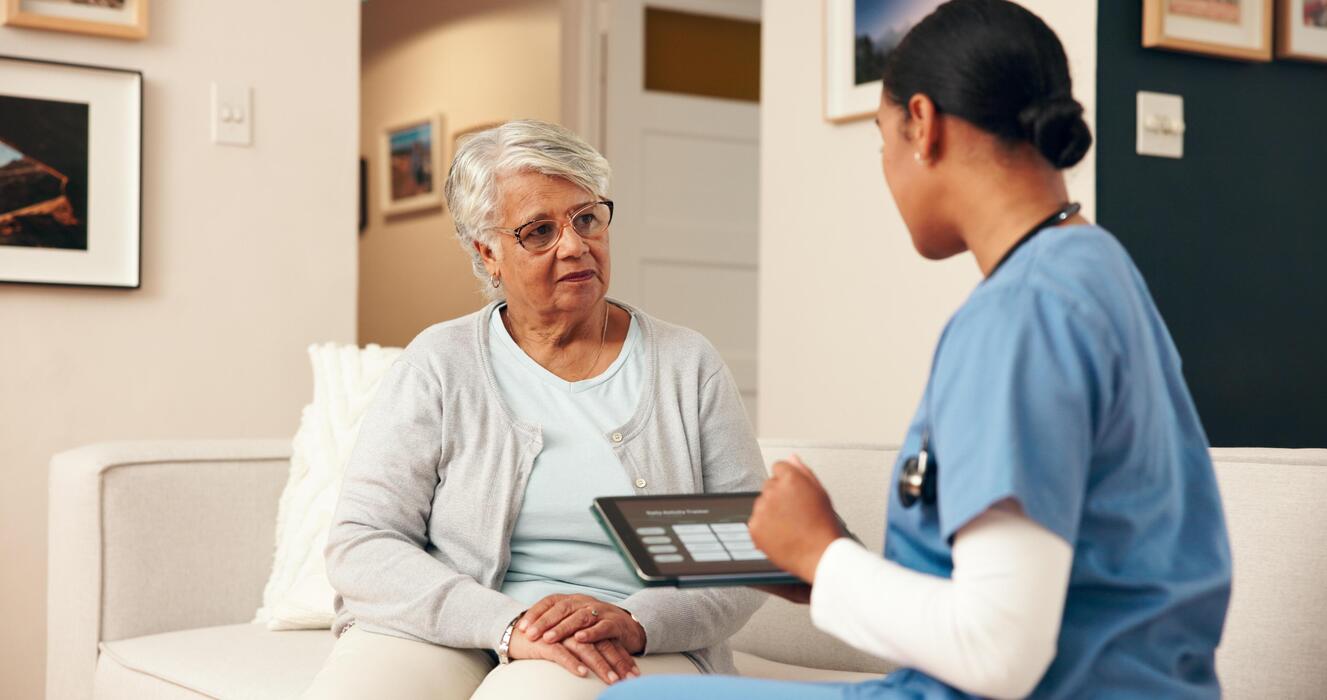
Mobile primary care practices deliver medicine where patients actually live, sending physicians and nurse practitioners into homes to care for homebound seniors, Medicare Advantage house-call panels, and concierge patients who cannot easily reach a clinic. That model only works when a clinician standing in a patient’s living room can open a cloud EHR, pull the full chart, e-prescribe, and document the visit over whatever cellular or home Wi-Fi signal happens to be available. Every laptop, tablet, and phone in the field carries protected health information across dozens of addresses a week, which turns device security, encryption, and remote wipe into daily clinical concerns rather than back-office ones. Between spotty connectivity, EPCS from the road, RPM data flowing in, visit routing across a wide service area, and HIPAA following the provider door to door, the technology has to be dependable long before anyone thinks about it. Most house-call practices are small and lean, so they cannot afford downtime, lost notes, or a security gap that stalls billing and puts patients at risk. Medical IT Company keeps mobile primary care practices fast, secure, and online.
why choose us for IT Services for Mobile Primary Care
We build IT around the way house-call clinicians actually work — on the move, in patients’ homes, over whatever connection they can get.
Reliable EHR access anywhere
We tune your cloud or mobile EHR, cellular connectivity, and failover so clinicians can open charts, document, and e-prescribe from any home visit — even where the signal is weak.
Security that travels with your team
Encryption, mobile device management, enforced locks, and remote wipe protect every laptop, tablet, and phone carrying PHI across your service area, keeping you HIPAA-compliant on the road.
Support that does not need an office
When a provider across town cannot log in, we fix it remotely and fast, because in mobile primary care there is no front desk to walk over to and no server room to reboot.


more ways we support healthcare





healthcare IT challenges mobile primary care practices face
The defining challenge of mobile primary care is that your point of care moves all day. Unlike a fixed office with a controlled network and a server closet, your clinicians work from a car and a patient’s kitchen table, relying on cellular data that fades in basements, rural pockets, and dense apartment buildings. A cloud or mobile EHR such as Elation, athenahealth, DrChrono, or ChartLogic solves part of this, but only if remote access is genuinely reliable and the workflow tolerates a dropped signal without losing a half-finished note. Getting connectivity, EHR performance, and offline resilience right is the single biggest determinant of whether a house-call day runs smoothly or falls behind.
Then there is the security surface. A mobile practice does not have one network to defend; it has a distributed fleet of laptops, tablets, and phones scattered across a metro area, each one holding or reaching PHI and each one a candidate to be left in a car, dropped in a driveway, or stolen from a bag. HIPAA does not relax because the exam room is someone’s bedroom, so full-disk encryption, mobile device management, enforced screen locks, and instant remote wipe are not optional extras but the baseline for staying compliant and defensible. Add e-prescribing with EPCS for controlled substances from the field, and identity, authentication, and audit trails have to be airtight everywhere your clinicians go.
Coordination and data flow add another layer. House-call medicine leans on visit routing and scheduling across a wide, shifting geography, secure referrals and care coordination with specialists and home health, telehealth for quick follow-ups, and increasingly a stream of remote patient monitoring readings that must land in the chart cleanly. VoIP and answering services keep homebound patients and caregivers connected to the practice between visits, and every one of these systems has to speak to the others without manual re-entry or fragile workarounds. When any piece breaks, the fix cannot wait for someone to drive back to an office, because there is no office to drive back to.
Finally, most mobile primary care practices are small, growing, and short on internal IT. A clinician or office manager ends up troubleshooting a login, a printer, or a syncing tablet between patients, which pulls attention away from care and revenue. Backup and disaster recovery are easy to postpone until a lost device or a ransomware incident turns a busy panel into a scramble to reconstruct records. What these practices need is a partner who understands house-call workflows, secures a mobile workforce by design, and answers the phone the moment a provider three towns over cannot get into the chart.
mobile primary care IT FAQs
Yes — our model is built to grow with house-call practices as you add clinicians, expand routes, and take on larger panels. Onboarding a new provider means a secured, EHR-ready device and access in place before their first visit, not a scramble on day one. As your geography widens, we scale connectivity, device management, RPM and telehealth workflows, and support capacity to match, all under a predictable plan. Our remote help desk keeps every clinician covered no matter how far apart they work, and we advise on technology decisions as you expand into new markets or services. You get enterprise-grade IT that flexes with a fast-moving mobile practice.
Lost devices and hardware failures are expected realities in house-call medicine, so we plan for them rather than react to them. Because your EHR and data live in secured cloud platforms with tested backups, a missing or broken laptop means we wipe it remotely and provision a replacement without losing patient records. We maintain a disaster recovery plan with defined recovery goals so charts, schedules, and documentation are quickly restored after any incident, including ransomware. Regular backup testing confirms your data is actually recoverable, not just theoretically saved. Your clinicians can lose a device and keep seeing patients the same day.
Because a mobile practice spreads PHI across a distributed fleet, we secure every device as if it will eventually be lost or stolen. That means full-disk encryption, mobile device management, strong authentication, and enforced screen locks on every laptop, tablet, and phone your clinicians carry. If a device goes missing, we can remotely wipe it before any data is exposed, and detailed audit trails show who accessed what and when. We pair this with HIPAA-aligned policies, security awareness for your team, and EPCS controls for compliant prescribing from the field. Protecting patients on the road is the baseline of everything we do.
Mobile primary care practices need IT designed for a workforce that documents from patients’ homes rather than a fixed office. That starts with reliable cloud or mobile EHR access, strong cellular connectivity with failover, and offline-tolerant workflows so a weak signal never loses a visit note or prescription. It also includes a secured device fleet with encryption, mobile device management, and remote wipe, plus EPCS for e-prescribing, secure telehealth, RPM data handling, VoIP, and care coordination. Underpinning all of it are HIPAA-compliant security, tested backup and disaster recovery, and responsive remote support. Medical IT Company delivers these as one integrated program built specifically for house-call medicine.
Most mobile primary care practices are best served by flat-rate managed IT, priced per clinician or per device so costs scale predictably as your panel and team grow. Rather than paying for surprise emergencies, you get a monthly plan covering monitoring, security, EHR support, device management, backup, and a help desk your providers can reach from the field. Pricing depends on how many clinicians you have, the size of your device fleet, your EHR platform, and your compliance needs. Because downtime or a lost device directly stalls documentation and billing, predictable managed IT usually costs far less than the disruptions it prevents. We build a right-sized plan after understanding your routes, tools, and workflows.
We treat connectivity as a clinical requirement, not an afterthought, starting with quality cellular data plans, signal boosters where needed, and hotspot failover so a provider is never stranded. We configure your cloud or mobile EHR and network for resilient remote access, with VPN and authentication that hold up on the move. Where the platform supports it, we lean on offline-tolerant workflows so documentation can continue through a dropped signal and sync automatically once coverage returns. We also right-size laptops and tablets so the EHR performs well in the field rather than crawling. The goal is simple: a full, reachable chart at every home, in basements and rural pockets alike.